A productivity tool should make it easier to begin. Daymark starts with that small ambition: give the day a little structure, then leave room for the work itself.
It is an independent TechnoThatch project, built around a daily planner, a focus timer, and a private place for reflection. There is no account to create and no team workspace to configure.
Begin with a few intentions
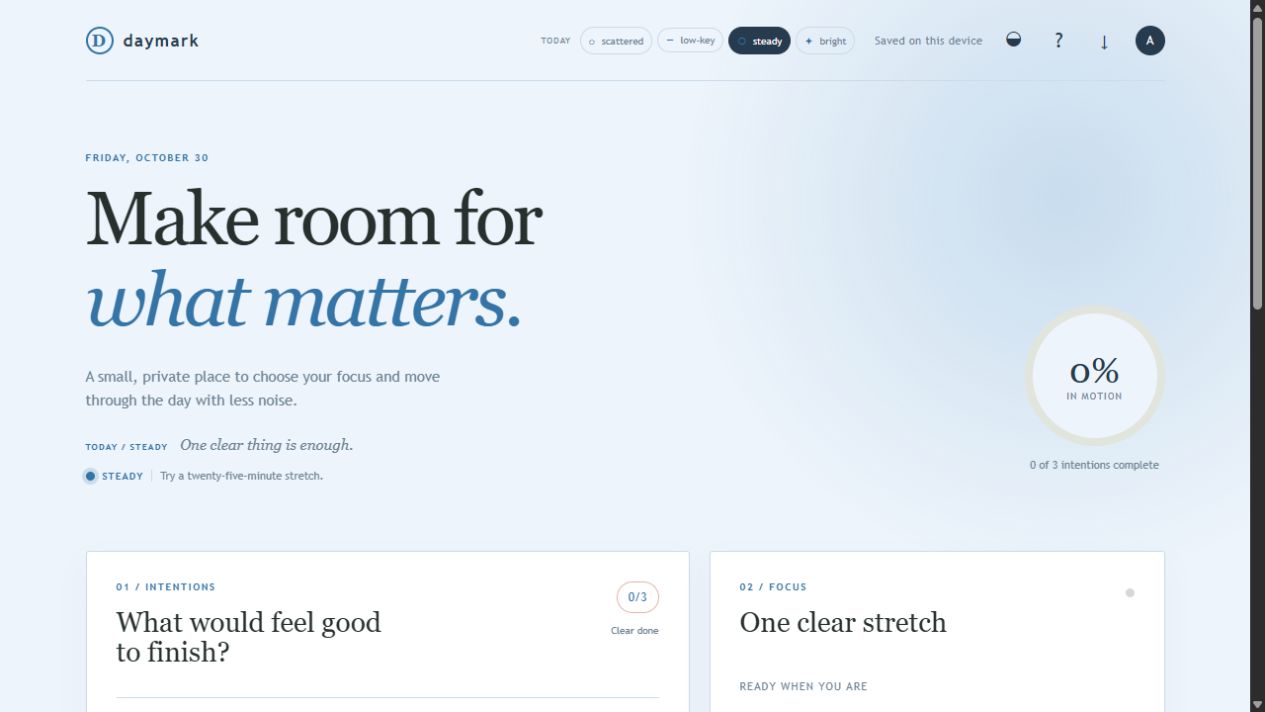
A long task list can make everything feel equally urgent. Daymark gives daily intentions their own space, with completion progress that is easy to read. It is a simple interaction: decide what deserves your attention, then mark it complete when you are done.
The aim is a clear starting point. A restrained interface, generous spacing, and a consistent visual hierarchy keep that starting point close at hand.
Give attention a little structure
The focus timer offers sessions of 5, 25, or 50 minutes. A short session can help someone begin; a longer one can give a piece of work more space. Those choices sit alongside the plan instead of opening another application.
This is a useful design constraint. Every extra control competes with the thing a person came to do. A small set of understandable choices can keep an interface approachable.
Keep the personal parts close
Daily notes and a lightweight mood check-in add a moment of reflection. Daymark keeps personal content in the browser, with JSON export and a clear-local-data control. It runs as a static application without an account, an external API, or an analytics service.
That approach has a practical tradeoff: browser storage is tied to a browser and device, and clearing it can remove the stored content. Export matters when someone wants to keep a separate copy.
Let the experience explain itself
A useful interface connects what it promises with what happens next. Daymark brings planning, focus, and reflection into a single responsive page. The product is small enough to explore directly, and its source is available to inspect.
You can try Daymark or explore the project. It is one example of the kind of work we care about: considered interfaces built around a practical need.